Hand Mirror vs. Badge vs. Keychain vs. Lipstick Holder
Plastic & Metal Craft Gifts Compared:
Short answer: the four formats are not interchangeable, because each one changes the tooling, the decoration process that can hold the artwork, the inspection routine and the packaging. A hand mirror, or a lipstick holder with hand mirror, is the right choice when the gift has to stay visible in daily use and support a beauty or lifestyle brand. Custom badge pins are the right choice when the programme needs identity, collectability and a display card. Keychains are the right choice when the item has to travel with the user and the artwork still reads at small size. Price alone will not settle the decision, because the four formats carry different tooling and inspection loads even when the minimum order is identical.
All four are produced from the same two material families and the same process set at Dongguan Build Plastic & Hardware Products Co., Ltd., which trades as BUILD PLASTIC&HARDWARE GIFTS. That makes the comparison unusually clean: the buyer is not choosing between suppliers here, but between four gift formats under one factory's published terms — 1,000 pcs minimum for custom orders, 30–40 days production after sample confirmation, and one shared process list.
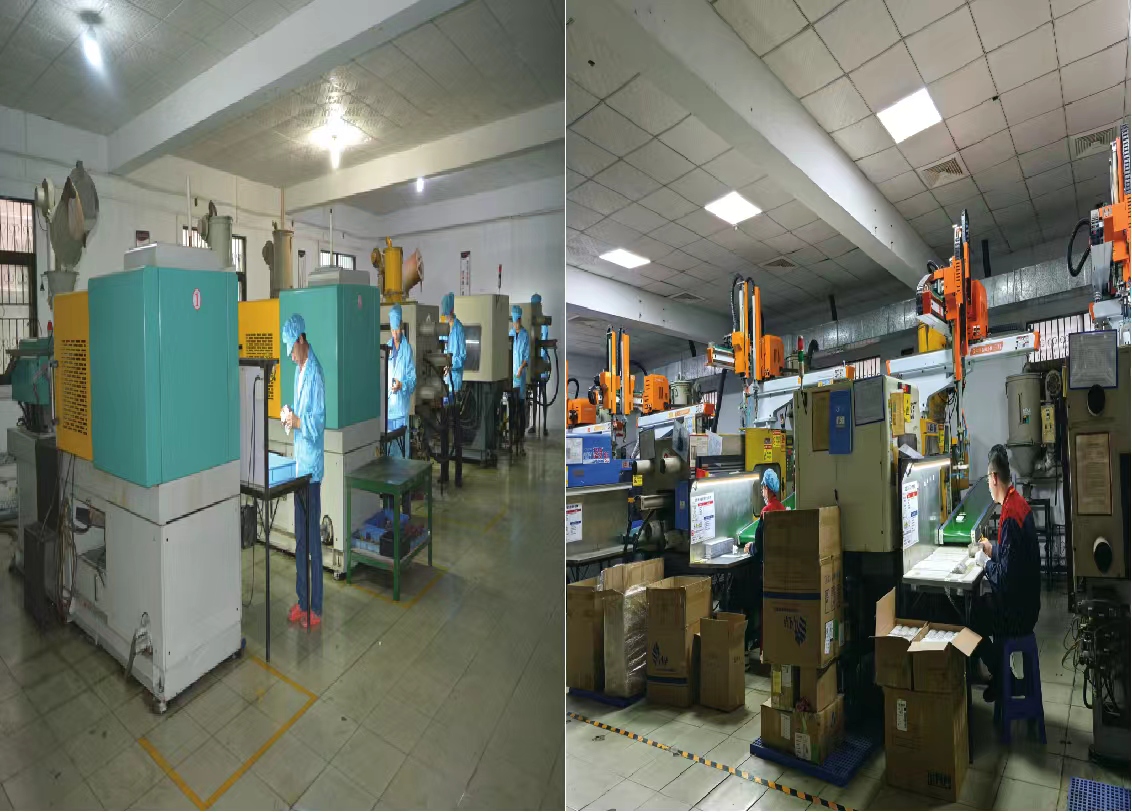
Dongguan Build Plastic & Hardware Products Co., Ltd. was established in 1999 and runs a 6,000 m² factory in Baoheng Industrial Zone, Dalong Village, Xiegang Town, Dongguan, Guangdong, China, with 100 employees, 15 engineers and an annual output of 6,000,000 units, 85% of it exported to Europe, America and Japan. Its product range covers badges, keychains, fridge magnets, makeup mirrors, decorative items, jewelry boxes, medals, trophies, commemorative coins, candle holders, hairpins, bookmarks, necklaces, phone chains, ring holders, lipstick holder with hand mirror, wine bottle stoppers, bottle openers, napkin rings, fork and spoon sets, coasters and other IP gifts, plus plastic and hardware gifts generally.
The four formats on one decision table
Read the table as a briefing sheet rather than a price list. Every process named in it is a published capability of the factory; the final process for a specific design is fixed only after the 3D rendering and the sample are approved.
| Gift format | Where it fits | Processes to confirm | Checks worth recording at sample approval |
|---|---|---|---|
| Hand mirror / makeup mirror | Beauty, retail and lifestyle gifting where the item is kept and used rather than stored away | UV printing, screen printing, pad printing, spray painting, laser engraving, plating | Scratch-resistant surface, non-toxic raw material, no sharp edges — the requirements recorded for beauty-industry projects |
| Custom badge pins | Fan, event and IP programmes where belonging and collectability are the point; often collected on a display card | Hard enamel, soft enamel, paint filling, epoxy drip, etching and colour filling, plating | Vivid, fade-resistant print, smooth surface, plating protected by sealing |
| Keychains | Everyday carry and broad brand visibility outside the original event or store | Laser engraving, etching, UV and screen printing, epoxy drip, plating | Artwork legibility at small size, surface and plating wear, edge finish |
| Lipstick holder with hand mirror | Beauty gift-with-purchase and cosmetic sets where storage and mirror are combined | Spray painting, plating, printing, epoxy drip | No sharp edges, scratch-resistant surface, non-toxic raw material |
Note: the plating options published by the factory are gold, silver, antique bronze, gun black, nickel, matte gold and matte silver. The 1,000 pcs MOQ applies to custom orders, and some simple in-stock molds support smaller orders. Production takes 30–40 days after sample confirmation and is extended for large, complex orders or peak season.
Why the four formats cannot be priced the same way
The first variable is tooling. BUILD's stated rule is that new molds usually require 1,000 pcs to reach a better unit price, while some simple in-stock molds support smaller orders. The factory runs injection molding for plastic parts and die casting and stamping for metal parts, so the tooling a design needs depends on the material route agreed at sampling. A design that can use an existing mold starts from a different position than one that needs a new tool, whatever the format — which is why a like-for-like unit price comparison only becomes meaningful after the material route is fixed.
The second variable is decoration. The published process list covers hard enamel, soft enamel, paint filling, epoxy drip, silk screen printing, UV printing, pad printing, spray painting, laser engraving, etching and colour filling, plus electroplating in seven finishes. Not every process behaves the same on every geometry: a technique that reproduces fine line work on a flat surface reads differently on a curved body or a small part. The 3D rendering and sample stage is where that is settled, and a buyer who skips the rendering review usually pays for the correction later in the mold.
The third variable is inspection and packaging. BUILD states that holding more brand certifications means higher production cost and more inspection procedures. In practice the factory carries out a full pre-shipment inspection and shares photos or videos of finished bulk production, and accepts third-party or buyer-arranged on-site inspection. Custom packaging is a separate line item: default packing is a regular OPP bag plus carton, while back cards, hang tags and gift boxes are quoted separately. For a mirror or a lipstick holder, the surface is the product, so packaging and surface protection deserve more of the buyer's attention than in a flat badge programme.
Hand mirror (makeup mirror): the item that stays on the table
A hand mirror is a vanity item rather than a souvenir. In BUILD's range this corresponds to the makeup mirror line. It is chosen when the gift has to be used repeatedly and kept in view, and when the brand identity has to survive close inspection on a surface the user looks at directly. It also carries a high surface expectation: a print defect or a scratch on a mirror body is visible immediately, whereas the same defect on a small keychain is not.
A mirror brief should fix five things before mould discussion: overall dimensions and mirror size, the material route, the decoration on the back and rim, the plating colour if a metal finish is wanted, and the packaging format. BUILD's recorded requirements for beauty-industry projects — scratch-resistant surface, non-toxic raw material and no sharp edges — are a practical checklist to carry into a mirror brief, and they belong on the sample approval sheet rather than only in the purchase order.
The main production risk sits after decoration, during handling and packing. That is a planning question, not a quality excuse: decide early whether the mirror ships in a printed gift box, in a back card with a hang tag, or in an OPP bag, because the three options carry different costs and different protection levels.
Custom badge pins: the format built around belonging
Custom badge pins do one job well: they mark belonging. BUILD produces metal badges, and the IP-entertainment project type recorded for this factory is a vocal concert in Japan, where the stated function was to strengthen fans' sense of belonging and group identity and to deepen the emotional bond between fans and artists, with the item collected and displayed on a display card after the event. That is a very different brief from a vanity item, and it changes what the buyer inspects.
For a badge, the processes that normally decide the look are hard enamel, soft enamel, paint filling, epoxy drip, etching and colour filling, finished with one of the seven plating colours. Plating care should be written into the specification: with proper sealing protection, the finish is not prone to fading under normal use, while prolonged soaking in water, friction or strong acid environments will accelerate oxidation — a normal phenomenon rather than a defect. The checks recorded for the IP project are equally practical: vivid printing colour, fade resistance and a smooth surface.
Choose the badge when the design has fine line work, when the programme is tied to a date or a community, and when the item will be kept rather than used. It is the format least dependent on packaging, which makes it the efficient choice for high-volume event distribution.
Keychains: the format that leaves the venue
Keychains carry a brand into ordinary life, which is both their advantage and their constraint. The advantage is reach: a keychain is used daily and travels well beyond the event, store or trade fair where it was handed out. The constraint is scale: artwork has to survive being reduced to a small area, and fine detail that works on a badge often collapses at keychain size.
The processes available for a keychain brief include laser engraving, etching, UV and screen printing, epoxy drip and plating. Engraving and etching suit durable single-colour marks; printing suits multi-colour artwork; epoxy adds a domed protective surface over a printed area. As with the badge, artwork should arrive as a high-resolution vector file in AI, CDR or PDF format with dimensions, processes and colours marked, so that the rendering stage can confirm what the process can actually hold.
The decision rule is straightforward. Choose a keychain when the artwork is simple enough to read at small size and the programme wants a gift that is used rather than displayed. If the artwork is detailed and the emotional value depends on the image being reproduced faithfully, the badge is the safer format; if the item must survive daily contact with keys and bags, plan the plating and the edge finish accordingly.
Lipstick holder with hand mirror: the narrow, high-fit choice
The lipstick holder with hand mirror combines storage and reflection in one item. It is the narrowest of the four formats, because it only makes sense for a recipient who uses lipstick, and it is the strongest fit when the gift is part of a cosmetic set, a gift-with-purchase or a counter promotion. The recorded beauty-industry project type at BUILD — a cosmetic packaging project in France — describes the same commercial logic: portable storage, decorative styling, gift packaging and brand promotion, with scratch-resistant surfaces, non-toxic raw material and no sharp edges as stated requirements.
That last point matters commercially. A lipstick holder is handled, opened and closed, and often carried in a bag, so edges and surface finish are not cosmetic details — they are the difference between a gift that is used and one that is thrown away. Spray painting, plating, printing and epoxy drip are the processes to discuss, and the packaging question should be settled at the same time, because a cosmetic set normally ships in a printed box rather than a plain bag.
Compared with a standalone hand mirror, the lipstick holder adds function and ties the gift directly to a product category, but it narrows the audience. If the campaign must appeal to every recipient regardless of makeup use, the mirror is the broader choice; if the campaign is anchored to a lipstick launch, the holder communicates the link without explanation.
Value comparison: what a certified supply adds to the unit price
The value question at decision stage is not which format is cheapest per unit, but what is included in the quoted price. BUILD's published comparison with low-priced and generic products states the position plainly: many factories use cheap recycled materials, which results in poor quality and low prices, while BUILD manufactures with virgin materials to protect quality. The same comparison cites a 5% brand premium and explains it through certification load — more brand certifications mean higher production cost and more inspection procedures.
What the certification portfolio covers is specific: Disney FAMA 025795, Universal Studios, Bandai, Hasbro, LVMH, L'Oréal, Victoria's Secret, Starbucks, BSCI, ISO 9001, Higg Index and Sedex. BUILD is also a designated producer for Xi'an Jiaotong University, the Palace Museum, Ctrip, Suzhou Museum, HSBC, Hang Seng Bank, the Olympic Games, World Expo, Starbucks, L'Oréal, Lancôme and Procter & Gamble. For a buyer whose programme requires brand approval before production, that portfolio is the practical difference between a quote and a workable supply route — and the buyer should still confirm which approvals apply to the specific project before ordering.
Apply the premium to the format actually being bought. A 5% difference on a low-unit-price badge is a different budget line from 5% on a mirror that ships in a printed gift box, and the inspection overhead is spread across a different number of units. That is the real cost comparison: not badge versus mirror in the abstract, but each format's tooling amortisation, decoration, inspection and packaging combined at your order quantity.
From artwork to shipment: the six steps that decide the outcome
BUILD's stated production flow is short enough to plan against, and each step produces a document the buyer should keep.
- Vector artwork submission. High-resolution AI, CDR or PDF files with dimensions, processing requirements and colours marked. This is the reference for every later dispute.
- 3D rendering and confirmation. The factory produces renderings and the buyer confirms them; this is where the process choice becomes visible before any tool is cut.
- Mold opening. Triggered only after rendering confirmation, which is why the earlier step should not be rushed.
- Sample making. A physical sample of the agreed design and finish.
- Sample confirmation. Approval should cover decoration, plating colour, edges, surface and packaging, not only the printed image.
- Mass production. After sample confirmation, regular orders take 30–40 days, extended for large, complex orders or peak season; the schedule is confirmed before order placement.
After bulk production, the factory shares actual photos or videos for verification and accepts third-party inspection or on-site inspection arranged by the buyer. Pre-shipment inspection is carried out in full. If defects are found on receipt, the buyer should provide photos and quantity statistics, and replacement or a discount is arranged as agreed; compensation for damage caused by human factors or transit extrusion requires prior confirmation.
Where these formats already fit: three recorded project types
The project records attached to this factory show how differently the four formats are used in practice, and each record carries its own working conditions.
IP entertainment, Japan — vocal concert. The gift was collected and displayed by fans on a display card after the event, with vivid printing colour, fade resistance and a smooth surface as special requirements. This is badge territory: identity, a date, a community.
Events and exhibitions, United States — competition medals. Medals are outside the four formats compared here, but the record illustrates the same logic: the item carries the event name and edition number, is displayed after the award ceremony on a medal stand, and requires clear engraving, an anti-tarnish surface and a smooth edge.
Beauty, France — cosmetic packaging project. Portable storage, decorative styling, gift packaging and brand promotion, with surface scratch resistance, non-toxic raw material and no sharp edges as stated requirements. This is where the hand mirror and the lipstick holder with hand mirror belong.
Manufacturing, quality and compliance evidence
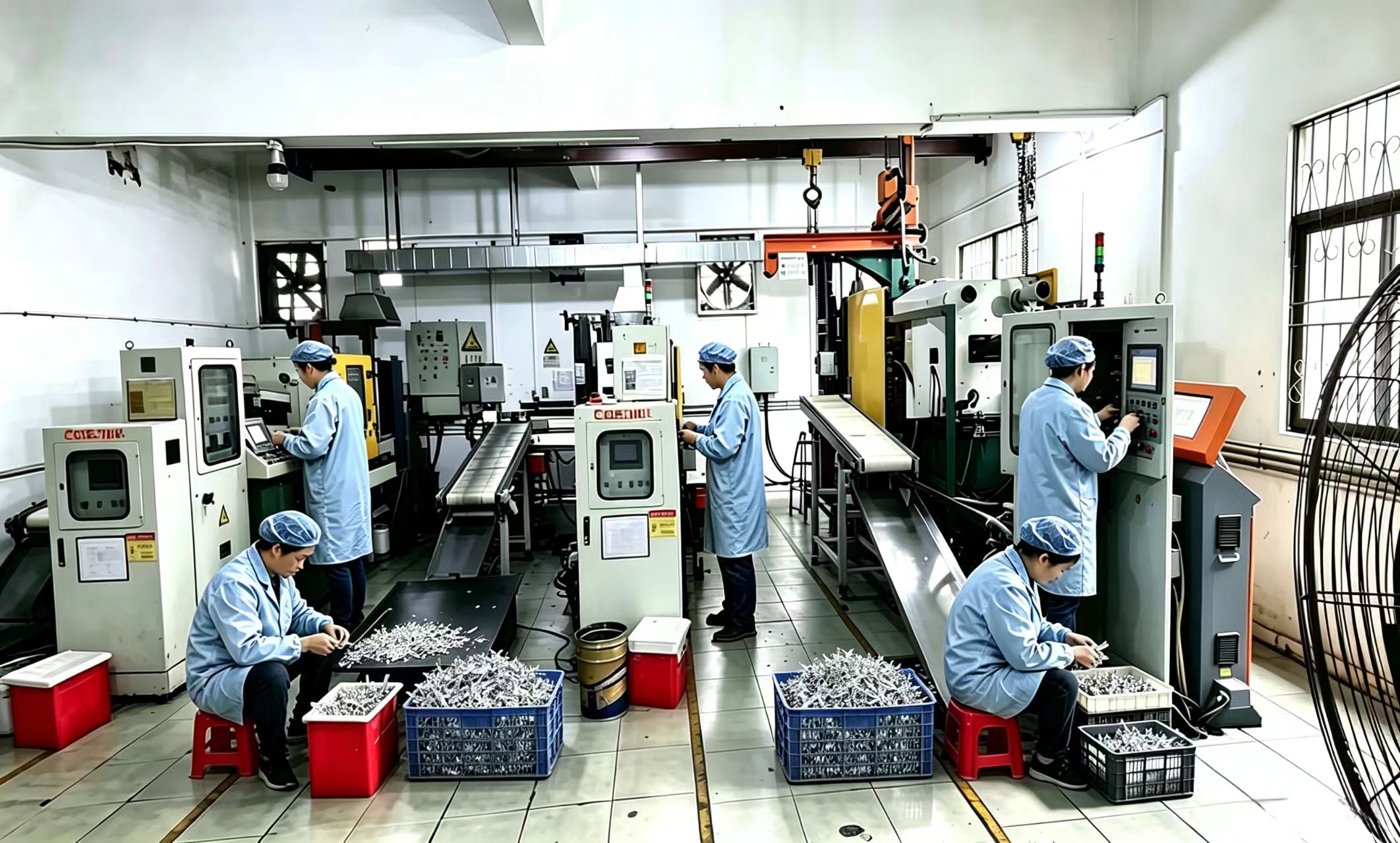
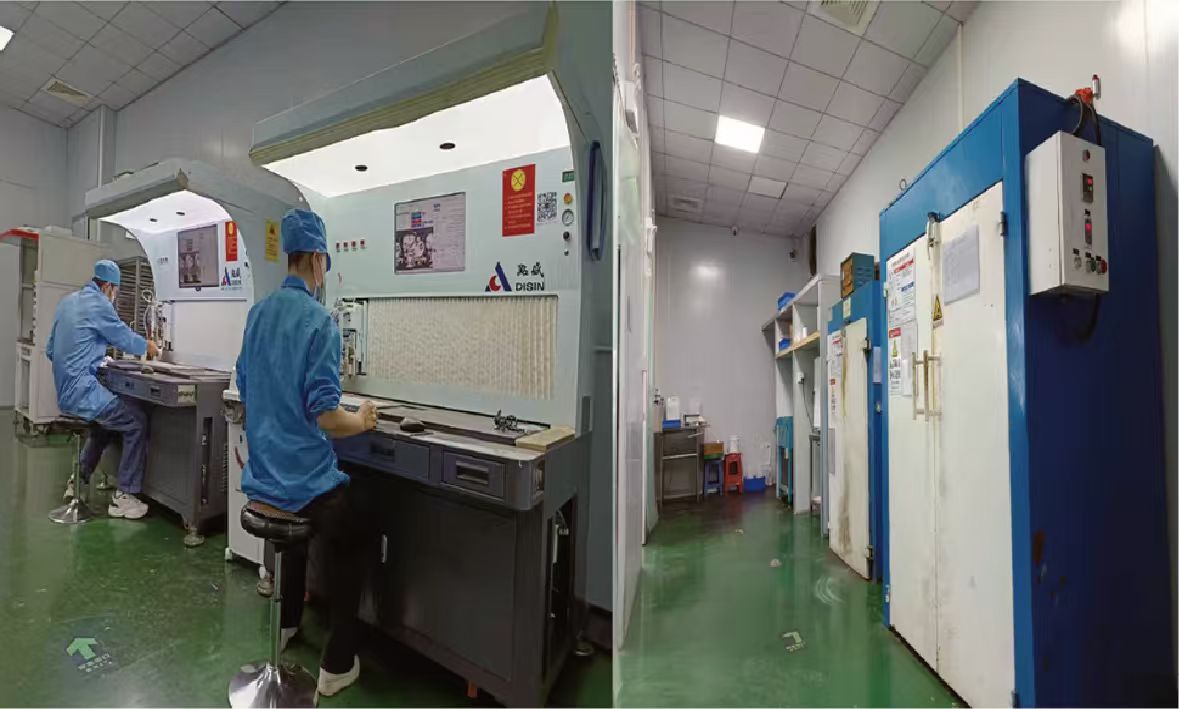
Capability matters because the four formats draw on different equipment. The factory is equipped with injection molding, die casting, stamping, cutting, screen printing, pad printing, automatic gluing, automatic ink spraying and automated packaging assembly lines, and all production workshops are standardised and modernised, with dust-free workshops and independent quality inspection facilities. That equipment mix is what allows plastic and metal formats to be quoted under one set of terms instead of being outsourced piecemeal.
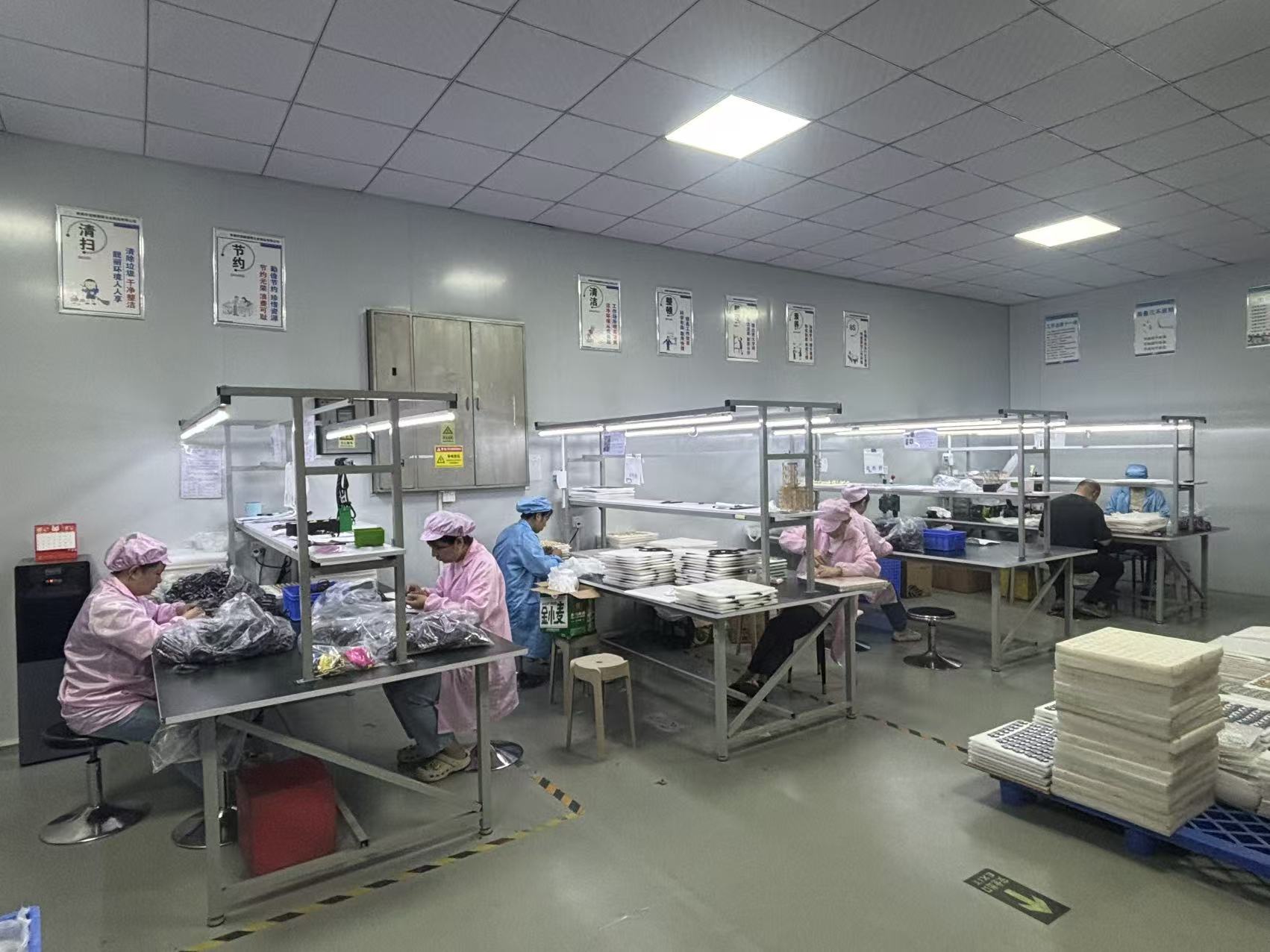
The engineering side is staffed by 15 engineers, which is the resource behind the rendering, mold and sample sequence rather than a marketing line. Internal management, human rights and quality management systems are described as robust, and the company has evolved from an OEM manufacturer into ODM and OBM services — relevant to buyers who need design support, not only tooling. On the commercial side, the factory also works with online retailers including Amazon, AliExpress, Tmall and Taobao, which shapes expectations around packaging and repeatable specifications.
What to verify before you approve the order
- MOQ reality. The custom-order MOQ is 1,000 pcs, and new molds usually require that volume for a better unit price; small orders depend on whether a simple in-stock mold exists.
- Testing scope. Environmental tests such as lead and cadmium testing can be arranged as required, with the testing fee borne by the customer and lead time confirmed separately.
- Packaging cost. Custom back cards, hang tags and gift boxes are available but quoted separately from the product.
- Plating expectations. Sealing protection keeps the finish stable in normal use; soaking, friction and strong acids accelerate oxidation.
- Schedule buffer. The 30–40 day window after sample confirmation extends for large or complex orders and peak season.
- Design requirements. Points such as 'no sharp edges' or 'scratch-resistant surface' must be written into the brief, because they are design decisions, not default assumptions.
FAQ
Can you provide test reports for the gifts?
Yes, environmental tests such as lead and cadmium testing can be arranged as required. The testing fee is borne by the customer, and the lead time for testing is confirmed separately from production.
Are you a factory or a trading company?
BUILD is a source factory specialising in custom hardware and plastic crafts, supporting mold opening and production for badges, keychains, fridge magnets, makeup mirrors, ornaments, jewelry boxes, medals, trophies, commemorative coins, candlesticks, hair clips, bookmarks, necklaces, phone chains, ring buckles, lipstick holder finger mirrors, wine stoppers, bottle openers, napkin rings, forks and spoons, coasters and more, at factory prices.
Can custom logos and patterns be made, and which processes are supported?
Yes. Custom patterns and logos can be produced using hard enamel, soft enamel, paint filling, epoxy drip, silk screen printing, UV printing, pad printing, spray painting, laser engraving, etching and colour filling. Electroplating options are gold, silver, antique bronze, gun black, nickel, matte gold and matte silver; with proper sealing protection the finish is not prone to fading in normal use, while prolonged soaking, friction or strong acid exposure will accelerate oxidation, which is a normal phenomenon.
What is the MOQ?
The MOQ for custom orders is 1,000 pcs. Some simple in-stock molds support small orders, while new molds usually require 1,000 pcs for a better unit price.
Can we inspect the goods before shipment, and how are defects handled?
Yes. After bulk production, actual photos or videos are provided for verification, and third-party inspection or on-site inspection arranged by the buyer is acceptable. Full inspection is carried out before shipment. If defective items arrive, provide photos and quantity statistics and replacement or a discount is arranged as agreed; compensation for damage caused by human factors or transit extrusion requires prior confirmation.
How long is the mass production lead time?
After sample confirmation, regular orders take 30–40 days. Lead time is extended for large, complex orders or peak season, and the schedule is confirmed before order placement.
How is it packaged, and can custom header cards, OPP bags and gift boxes be made?
Default packing is a regular OPP bag plus carton for safe transport. Custom back cards, hang tags and gift boxes are available, with packaging quoted separately. If you are weighing these four formats for a specific programme, the fastest next step is to send vector artwork in AI, CDR or PDF with dimensions, processes and colours marked, so a 3D rendering and sample can confirm the format — the full range and specifications are in the BUILD product catalogue (PDF).
Conclusion
The four formats answer four different briefs. The hand mirror is the daily-use vanity item, the lipstick holder with hand mirror is the narrow beauty-set choice, the badge is the identity item built around a community or a date, and the keychain is the everyday carry item that extends reach beyond the event. Under one factory's terms they share a 1,000 pcs custom MOQ, a 30–40 day production window after sample confirmation, and the same decoration and plating list — so the decision should be made on surface expectations, artwork scale, packaging and inspection load rather than on headline unit price.
For a buyer at decision stage, the practical value of working with Dongguan Build Plastic & Hardware Products Co., Ltd. is the combination of both material routes under one roof, a documented process from artwork to shipment, and a certification portfolio that includes Disney FAMA 025795, Universal Studios, Bandai, Hasbro, LVMH, L'Oréal, Victoria's Secret, Starbucks, BSCI, ISO 9001, Higg Index and Sedex. The factory positions a 5% brand premium against low-priced alternatives and explains it through virgin materials and inspection load; whether that premium is worth paying depends on how much of your programme depends on brand approval and on the surface quality of the item itself.

To request samples, a quotation or the full catalogue for any of the four formats, contact the team at build-gifts.com or email lilylee@build-gifts.com. The factory is located in Baoheng Industrial Zone, Dalong Village, Xiegang Town, Dongguan, Guangdong, China, and the downloadable 2026 product catalogue (PDF) lists the full range of badges, keychains, magnets, mirrors, ornaments, jewelry boxes, medals and related gifts.
Have Questions or Need More Details?
Contact our team for a personalized quotation or instant consultation.
Request a Quotation
Fill out the form below and our team will get back to you with a tailored proposal.
WhatsApp Direct Chat
Prefer to chat in real-time? Message us on WhatsApp for instant assistance & quick answers.
- Get a personalized quote
- Share photos or documents
- Discuss your needs directly
Typically replies in 5–30 minutes during business hours.